

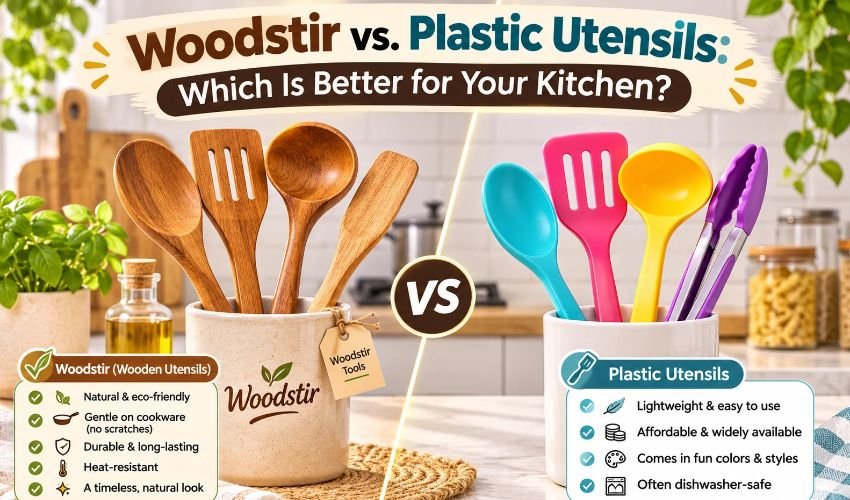
Every kitchen needs good cooking tools. We use spoons to stir soup, spatulas to turn food, and ladles to serve meals. Some of these tools are made from wood, while others are made from plastic. Both types can help with daily cooking. However, they do not work in the same way. Woodstir vs. plastic utensils is an important topic for people who want safe, strong, and easy-to-use kitchen tools. The right choice can help protect your pans and make cooking more comfortable.
Woodstir offers wooden cooking tools made from acacia wood. Plastic utensils come in many shapes, colors, and materials. Some plastic tools are cheap and easy to wash. Wooden tools have a natural look and do not melt like plastic. Yet both have good and bad points. This guide explains their uses, heat safety, cleaning needs, costs, and product life. It also shares simple tips to help you choose the best tools for your kitchen.
What Is Woodstir?
Woodstir is a name used for wooden kitchen utensils. Its public product posts describe handmade acacia wood tools for cooking and serving food. The range includes a stirrer, turner, slotted spoon, and ladle. These tools help people prepare different kinds of meals. A wooden stirrer can mix soup or sauce. A turner can move food in a pan. A ladle can help serve soup or curry.
Acacia is a type of hardwood. It has a firm surface and natural grain patterns. Its color can range from light brown to dark brown. This makes each wooden tool look a little different. Many people like this style because it adds a warm and natural touch to the kitchen. Woodstir tools are also made for daily tasks, such as mixing, stirring, and serving food. Their exact size, finish, and care needs depend on the product. Buyers should check these details before making a purchase.
What Are Plastic Cooking Utensils?
Plastic cooking utensils are tools made from man-made materials. They include spoons, spatulas, ladles, and serving tools. These products are common in homes because they are light and often cost less than wooden tools. Many plastic utensils also come in bright colors and different shapes. Some have soft edges, while others are hard and firm. This gives home cooks many choices for different meals.
Not all plastic utensils are the same. Some are made from nylon, which is a type of plastic used in cooking tools. Others are made for cold food or serving only. Heat is one of the main things to check before using them. A plastic spoon that works well for salad may not be safe in a hot frying pan. A tool made for cooking should have a clear heat limit. Its label should also explain how to wash and store it.
Woodstir vs. Plastic Utensils: Main Differences
Woodstir and plastic utensils can do many of the same jobs. You can use them to mix food, stir sauces, and serve meals. The main difference is the material. Wood is a natural material that feels firm in the hand. Plastic is man-made and can be hard or flexible. Wood often needs more care after washing. Plastic may be easier to clean, but it can lose its shape when exposed to too much heat.
| Feature | Woodstir | Plastic utensils |
|---|---|---|
| Material | Acacia wood | Man-made plastic |
| Heat | Can scorch but does not melt | Can melt or bend |
| Weight | Depends on size and wood | Often light |
| Cleaning | Best washed by hand | Some are dishwasher-safe |
| Strength | Firm and solid | Depends on the type |
| Appearance | Natural wood grain | Many colors |
| Nonstick pans | Gentle when smooth | Gentle if not hard or rough |
| Care | Needs full drying | Often needs less care |
| Price | Depends on size and quality | Many low-cost options |
| Product life | Can last years with care | Depends on heat and wear |
Which Utensils Are Better for Cooking Hot Food?
Heat is a major factor when choosing cooking tools. Wooden utensils can be useful when you prepare hot meals. Wood does not melt like plastic. You can use a wooden spoon to stir hot soup, rice, or curry. A wooden turner can also help move vegetables around a warm pan. This makes wood a good choice for many daily cooking tasks. However, wood is not fireproof. It can burn when it touches a flame or a very hot surface for too long.
Plastic utensils need more care around heat. Some can bend, melt, or change shape when they touch a hot pan. Heat-safe nylon tools can handle certain cooking temperatures, but they still have limits. These limits are different for each product. If you use plastic cooking tools, always read the label. Never leave them in hot oil or against the side of a hot pan. Woodstir is often a better choice for stirring hot food, but both materials should be kept away from direct flames.
Are Woodstir Utensils Safe for Nonstick Pans?
Nonstick pans are popular because food does not stick to their surface as easily. People often use them to cook eggs, pancakes, fish, and vegetables. However, the surface can become damaged when you use rough or sharp cooking tools. This is why the type of spoon or spatula matters. Smooth wooden utensils are often a good choice for nonstick cookware. They can move food without the sharp contact caused by metal tools.
Woodstir wooden utensils may work well with nonstick pans when their edges are smooth. A wooden spoon can help mix food without making deep scratches. A wooden turner can move soft food around the pan. Plastic utensils can also work, but some hard plastic tools may scratch the surface. A soft, heat-safe spatula is often a good option. Always check the instructions for your cookware. Even wooden tools can cause wear if they have rough edges or if you press too hard.
Are Wooden Utensils Safer Than Plastic Utensils?
Food safety is one of the most important parts of cooking. Both wood and plastic can be safe when the products are made for food use. Wooden spoons do not melt during normal cooking. This can be helpful when you prepare warm meals. Still, wood can absorb water, food smells, and some stains. If a wooden utensil has deep cracks, food may become trapped inside. This can make it harder to clean.
Plastic utensils have different safety needs. Some types may release small amounts of material into food when used at high heat. This is why the type of plastic and its heat limit matter. You should not use a plastic spoon that has melted, cracked, or lost its shape. It is also important to know that not every plastic cooking tool is unsafe. Well-made tools can work well when used as directed. Clean tools and good cooking habits matter more than choosing a material based on its name alone.
Which Utensils Are Easier to Clean?
Cleaning kitchen utensils helps keep food safe. Plastic tools are often easy to wash because they have smooth surfaces. Many can be cleaned with dish soap and warm water. Some are also safe for the dishwasher. This can save time after cooking a large meal. However, not every plastic utensil can go into the dishwasher. You should read the product instructions before washing it. Deep cracks or melted edges can also make plastic tools harder to clean.
Woodstir wooden utensils need more careful washing. Use warm water, mild dish soap, and a soft sponge. Wash the spoon or spatula soon after cooking. Then rinse it well and dry it with a clean towel. Let it air-dry before putting it away. Do not leave wooden tools soaking in water. Water can enter the wood and cause it to swell or crack. Dishwashers can also damage many wooden utensils. Good cleaning habits can help your wooden tools stay useful for years.
Which Utensils Last Longer?
A cooking tool should be strong enough for daily use. Well-made wooden utensils can last for many years when they receive proper care. Acacia wood is firm, which makes it useful for spoons and turners. A good wooden spoon can stir thick food without bending much. It may change color with age, but that does not always mean it is damaged. The main signs of damage include deep cracks, loose parts, and sharp splinters.
Plastic utensils can also last a long time when they are used in the right way. A strong nylon spatula may work well for many meals. However, heat can shorten the life of some plastic tools. Cheap products may bend, crack, or break after regular use. The best way to choose a long-lasting tool is to check its quality. Look for smooth edges, a strong handle, and a shape that feels comfortable. A good tool may cost more at first but save money over time.
Which Option Is Better for the Environment?
Many people want kitchen products that create less waste. Wooden utensils can be a good option when the wood comes from well-managed forests. Wood is a natural material, and a strong wooden spoon may last for years. This can reduce the need to replace it often. Yet the way a wooden product is made also matters. The source of the wood, any added finish, and how far the product travels can all affect its impact on the environment.
Plastic utensils have different problems. Many are made from materials that come from oil or gas. Some plastic tools are hard to recycle, especially when they are small or made from mixed materials. However, throwing away a working plastic spoon just to buy a new wooden one may create more waste. A better choice is to use safe tools for as long as they work well. When you need a new utensil, choose one that is strong, useful, and made to last.
Woodstir vs. Plastic Utensils: Which Is More Affordable?
Price is important when buying cooking tools. Plastic utensils often have a lower starting price. You can find simple plastic spoons and spatulas in many stores. Some sets include several tools at a low cost. This makes them a useful choice for people who are setting up a new kitchen or have a small budget. However, a low price does not always mean good quality. A weak plastic spatula may bend or break after only a short time.
Woodstir wooden utensils may cost more than basic plastic tools. Their price depends on the size, number of pieces, and product quality. Handmade wooden tools may also cost more because of the work needed to make them. Before buying, compare the price of each tool rather than looking only at the set price. You should also think about how often you cook. If you cook every day, spending more on a strong utensil may be a good choice.
Which Utensils Feel Better During Cooking?
Comfort can make cooking easier. A wooden spoon often has a firm handle that is easy to hold. This can help when you stir thick sauces, rice, or other heavy foods. Wood also does not carry heat as fast as metal. This can make the handle more comfortable during normal cooking. However, the handle can still become hot if it stays close to a flame for a long time.
Plastic utensils are often light and easy to move. Some have thin, flexible ends that slide under food. This can help when turning pancakes or lifting soft eggs. A plastic spatula may also be easier to use for people who prefer a lighter tool. The best choice depends on the meal. For thick curry or sauce, a firm wooden spoon may feel better. For soft food that needs a thin edge, a flexible, heat-safe spatula may be easier to use.
How to Care for Woodstir Wooden Kitchen Utensils
Wooden utensils need simple but regular care. Wash each tool after cooking so food does not stay on the surface. Use a soft sponge, mild soap, and warm water. Avoid strong cleaning pads that can make the wood rough. After washing, rinse the tool and dry it with a clean towel. Let it dry fully before putting it into a kitchen drawer. Keeping wooden utensils in a clean, dry place helps protect them from water damage.
Some wooden utensils may need food-grade mineral oil when the surface becomes very dry. However, do not add oil without checking the product care guide. Some wooden tools have special finishes that need different care. You should also inspect the surface from time to time. If the wood develops deep cracks or sharp splinters, replace the utensil. Never use a damaged spoon that may leave small wooden pieces in your food.
Which Utensils Should You Choose for Different Foods?
The type of food you cook can help you choose the right kitchen tool. A wooden stirrer is useful for mixing soup, sauce, and rice. A wooden turner can help move vegetables or cooked meat in a pan. A wooden ladle can help serve soup or curry. These tools work well when you need a firm handle and a smooth surface. They are also useful for many meals cooked in nonstick pans.
Plastic tools may be more useful for some other tasks. A plastic serving spoon can work well for cold salads. A flexible, heat-safe spatula can help turn eggs or pancakes. A plastic scraper may also help remove soft food from a bowl. The key is to use each tool for the job it was made to do. You do not need every utensil to be made from the same material. Many kitchens work best with a mix of wood, heat-safe silicone, and other suitable tools.
Common Mistakes to Avoid With Wooden and Plastic Utensils
One common mistake is leaving a spoon inside a hot pan after cooking. This can damage wood and plastic. A wooden spoon may burn when it stays against a very hot surface. A plastic spoon may melt or change shape. Another mistake is using a serving spoon for high-heat cooking without checking its heat limit. Tools made for cold food may not be suitable for frying or cooking in hot oil.
Poor cleaning is another problem. Some people leave wooden tools in water for hours. This may cause them to crack. Others put wooden spoons in the dishwasher, where high heat and water can damage them. Plastic tools also need care. If a plastic spoon has deep scratches, melted edges, or broken parts, it should be replaced. Taking care of your utensils can make daily cooking safer and easier.
Is Woodstir Worth Choosing Over Plastic Utensils?
Woodstir can be a useful choice for people who like wooden kitchen tools. Its acacia wood products offer a natural look and a firm feel. Wooden spoons and turners are useful for stirring hot food and working with many nonstick pans. They do not melt like plastic, which gives them an advantage during many common cooking tasks. However, they need regular washing and full drying. People who want dishwasher-safe tools may prefer other materials.
Plastic utensils still have a place in the kitchen. They are often light, easy to find, and sold at low prices. Some are flexible, which makes them helpful for lifting soft food. The better choice depends on the task, not just the material. If you want a tool for daily stirring, a smooth wooden spoon is a good option. If you need a flexible spatula, a heat-safe silicone or nylon product may suit you better.
Conclusion
The woodstir vs. plastic utensils comparison shows that both types have useful features. Woodstir wooden utensils are firm, natural-looking, and helpful for many hot cooking tasks. They can also be gentle on nonstick cookware when their edges are smooth. However, they need careful washing and drying to stay in good condition.
Plastic utensils are often lighter, cheaper, and easier to clean. Some also have flexible edges that work well for soft foods. Yet plastic tools must be used within their heat limits. Damaged or melted utensils should always be replaced.
For daily cooking, a smooth wooden spoon or turner is a useful choice. A heat-safe silicone spatula can also be a good tool to keep nearby. Choose the utensils that match your meals, cookware, and budget. Good tools, proper cleaning, and safe cooking habits can help make your kitchen a better place to work.
